Special feature
Formula 1
How high-tech F1 has changed the race engineer role
A Formula 1 race engineer’s job used to be to collect the feedback from a driver and translate that into modifications on the car.

Roberto Chinchero
Edited: Oct 19, 2021, 6:12 AM
Copy link
Share on Viber
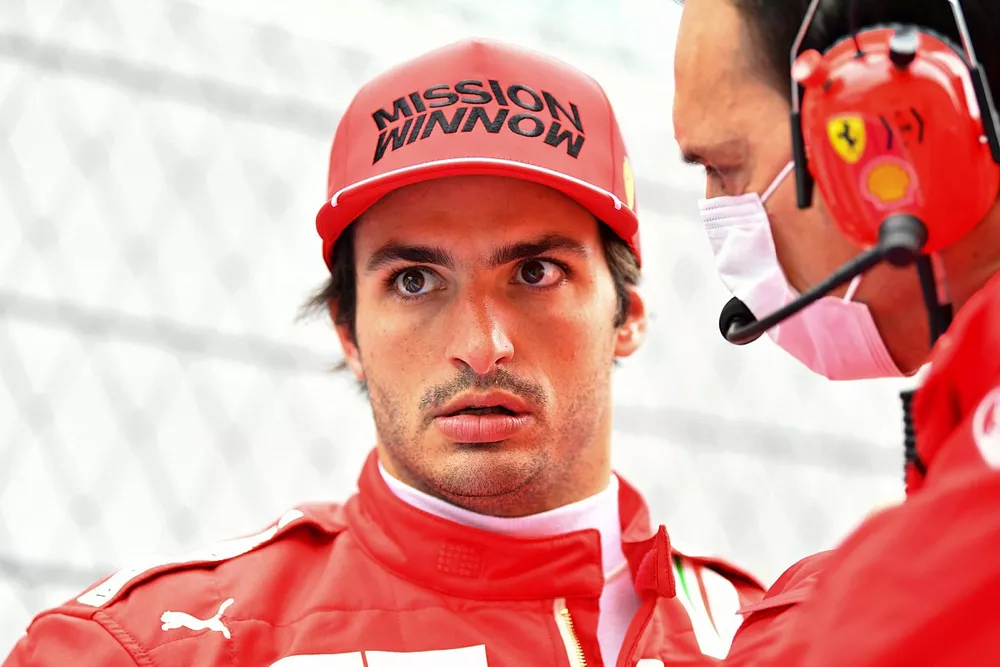
However, it has now transformed into a very complex role. It requires an individual to not only deal with the driver aspect, but be at the top of a communication chain that includes the pit-wall, garage and remote factory operations to offer analysis in real time.
In simple language, a race engineer is now a driver interface fed by real-time data.
Recent weather impacted races in Russia and Turkey, where race engineers and drivers had to make critical decisions on the hoof, brought to the spotlight the importance of this relationship between the drivers and their pit wall.
It was the perfect proof of how the engineer must now act as the channel for all the extra information he is being fed – both from the driver in the car, as well as strategists, weather experts and data analysts either in the garage of back at base.
The radio messages that we hear at home are just the tip of the iceberg then when it comes to understanding the success and failures of that driver/engineer relationship.
It is far from a one-way street of the engineer taking on board information from the driver to better adjust the car. Now, it’s a constant dialogue – and his role is pretty much to be the backbone of a successful weekend during every moment of track action.
Laurent Mekies, Racing Director, Ferrari, in the Team Principals Press Conference
Photo by: FIA Pool
For Ferrari’s racing director Laurent Mekies, who has previously worked for Arrows, Minardi, Toro Rosso and the FIA, the job for a race engineer is far more pro-active now that it was even a decade or so ago.
“The biggest evolution in this role was driver-coaching,” he told Motorsport.com.
“Fifteen or 20 years ago, a track engineer could hardly have provided a driver with driving advice like he is able to do today, because there was none of the real-time data available that we currently have.
"Formula 1 has evolved a lot. The level of analysis and estimates in real time today gives us a much deeper knowledge of tyres. We can also read many more real-time parameters, and in general there are more sensors on the car.
"This allows us to interpret the data we receive from the car in real time and obtain information which is then passed on to the driver.”
The expansion of F1 teams, and this positioning of the race engineer as a funnel for all the information being fed to the driver from a range of outside parties, means communication lines are king.
Mess anything up in this process, and let a piece of dud information seep its way into the system – and that can spell the difference between a potential brilliant result and complete failure.
The increased complications of the expanded role means that training on communication skills is a must; as is constant analysis of performance.
"Each team has its own type of communication procedure, which goes beyond the aptitude of the individual engineer,” said Mekies.
“We do some tests, plus there is specific training. After the race weekends, we listen to and re-analyse both the communications you hear via the radio between the engineer and the driver, and those that take place in the internal communication chain.
"If you look at Sochi as an example, this information included weather forecasts, and the conditions of the tyres of all the drivers on the track, information on the car and the lap pace of the opponents, and all the data read in real time.
"It is a chain of command that is combined with communication protocols, flows of dialogue and decisions that pass from the remote garage, to the garage on the track, to the wall and finally to the driver. We need a time for discussion, decision and communication.”
Toto Wolff, Team Principal and CEO, Mercedes AMG, and colleagues on the pitwall
Photo by: Steve Etherington / Motorsport Images
But there is one aspect that needs to be tuned to the complete preference of one individual: and that is what a driver likes and wants to hear.
Each track engineer ends up developing his own approach to dealing with the role; trying to marry the flow of information with the character in the cockpit.
Mekies adds: “Not all drivers want the same amount of information. Not all want it at the same time, and not all want it in the same way.
"There are drivers who want to be motivated, others who prefer to be left alone. There are drivers who constantly ask for lap times, and that information helps serve as a reference point, let's say an extra charge. But there are others who prefer a more silent approach, with communications reduced to a minimum.
"But the relationship between the engineer and the driver is fundamental on this front, and it is necessary to understand the correct approach to put the driver in the best conditions.
“The way of communicating, as well as the tone of language, needs to understood in context. Sometimes a dialogue that seems more excited is aimed at the personality of the driver, and delivering what he needs to perform in the best way.”
But just as the drivers are under pressure to deliver everything on track with no errors, so too is there is a minimal tolerance of things going wrong that are expected from the pitwall. A race engineer’s job is not easy.
“It is not a role for the faint-hearted,” explained Mekies. “The challenge is to make fewer mistakes than others, because everyone makes them.”
We want your opinion!
What would you like to see on Motorsport.com?
Take our 5 minute survey.
- The Motorsport.com Team
Read and post comments
Read also :
Share Or Save This Story
Copy link
Share on Viber
Previous article Imola in, China out as F1 reveals 2022 calendar
Next article Norris: Openness over mental health important to help others
Top Comments
There are no comments at the moment. Would you like to write one?
View More & Comment

More from
Roberto Chinchero

Ferrari set for crunch meeting as Lewis Hamilton and Charles Leclerc tension reaches Brazil
Formula 1
Formula 1
Sao Paulo GP
Ferrari set for crunch meeting as Lewis Hamilton and Charles Leclerc tension reaches Brazil
Latest news

Alex Bowman hits out at critics in snarky post, shooting down early exit rumors
NASCAR Cup
NAS NASCAR Cup
Homestead-Miami
2 h
Alex Bowman hits out at critics in snarky post, shooting down early exit rumors
Ryan Blaney gets sweet redemption after 'nightmares' following 2024 Homestead loss
NASCAR Cup
NAS NASCAR Cup
Homestead-Miami
3 h
Ryan Blaney gets sweet redemption after 'nightmares' following 2024 Homestead loss
IndyCar 2026 season review: Dale Coyne Racing
IndyCar
Indy IndyCar 3 h
IndyCar 2026 season review: Dale Coyne Racing
Noah Gragson apologizes to Daniel Suarez for spinning him at Homestead
NASCAR Cup
NAS NASCAR Cup
Homestead-Miami
3 h
Noah Gragson apologizes to Daniel Suarez for spinning him at Homestead
Feature
Discover prime content

Subscribe and access Motorsport.com with your ad-blocker.
From Formula 1 to MotoGP we report straight from the paddock because we love our sport, just like you. In order to keep delivering our expert journalism, our website uses advertising. Still, we want to give you the opportunity to enjoy an ad-free and tracker-free website and to continue using your adblocker.
You have 2 options:
- Become a subscriber.
- Disable your adblocker.
Subscribe now Already subscribed? Sign in here
Already disabled your adblocker?
Reload page
Manage Alerts
Subscribe