Breaking news
Formula 1
Ferrari evaluating radical 'double anchor' injector idea
Ferrari may already have been the surprise of the first Formula 1 pre-season test with the pace and reliability of its new SF70H, but its biggest development could be yet to come.

Franco Nugnes
Edited: Mar 6, 2017, 11:28 AM
Copy link
Share on Viber

For while its car has appeared to deliver the speed and handling to please Kimi Raikkonen and Sebastian Vettel from the off, it is on the engine front that Ferrari may have made even bigger inroads.
And there is now talk that it is evaluating a 'double anchor' injection system that could lift its performance later in the campaign.
Engine steps
Ferrari managed to complete the four days of the first pre-season test with just a single power unit, and repeated that feat with its customer team Haas, the only other outfit using its 2017 engine.
After the test, Haas team boss Gunther Steiner hailed Ferrari's progress with its 2017 power unit as 'amazing'
While the first outing of the 062 engine is promising, it has emerged that the engineers in Ferrari's racing department are working on an innovative technical solution that could deliver a big leap in performance later in the campaign.
Double anchor injector
In Maranello, under the orders of president Sergio Marchionne, there has been a lockdown on communication with the media, but word has leaked out that efforts are underway to perfect a new type of fuel injector that has a double anchor.
While double jets are not allowed by the rules, this double anchor can deliver similar benefits, because the injector needle can be opened and closed with much greater precision.
This will reduce the possibility of excess fuel entering the chamber which is then not burned perfectly.
The end result of that there should be more power and less consumption – one of the keys to performance in this turbo hybrid V6 era.
Test project
It is thought that this new technology has not been tested on track yet, with the version of the engine that ran in Barcelona being the standard version.
However, if work on the new technology is successful, then it is possible that Ferrari could introduce it alongside its TJI (Turbulent Jet Ignition) concept for pre-combustion in the chamber.
Fighting drag
While much of the focus this year has been on the aerodynamic changes, the higher drag of the 2017 cars means that engine performance is going to be even more important.
For although the F1 regulations have made available an extra 5kg of fuel for the race, teams managing to have much better fuel consumption than others could have a big advantage.
If we remember that 10kg of weight on a car is worth three tenths of a second per lap, there are good performance gains to be had if you can run lighter.
F1's development race in 2017 looks like it will not just be about aerodynamic updates, because there are big pushes coming on the engine front too.
We want your opinion!
What would you like to see on Motorsport.com?
Take our 5 minute survey.
- The Motorsport.com Team
Read and post comments
Read also :
Share Or Save This Story
Copy link
Share on Viber
Previous article Mercedes plans big update push for second F1 test
Next article Tech analysis: How Renault made big progress with its 2017 car
Top Comments
There are no comments at the moment. Would you like to write one?
View More & Comment

More from
Franco Nugnes
FIA enforces new rule to close F1 cost cap loophole
Formula 1
Formula 1
United States GP
FIA enforces new rule to close F1 cost cap loophole
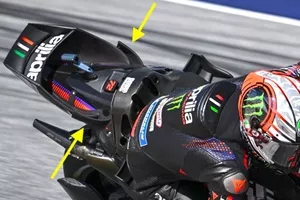
This is the new tail section that Marco Bezzecchi debuted on the Aprilia
MotoGP
MotoGP
Austrian GP
This is the new tail section that Marco Bezzecchi debuted on the Aprilia

Why Charles Leclerc isn't using latest ADUO2 engine in the Spanish GP
Formula 1
Formula 1
Spanish GP
Why Charles Leclerc isn't using latest ADUO2 engine in the Spanish GP

More from
Ferrari

On this day: Fernando Alonso wins the world title, Michael Schumacher retires from F1
Formula 1
Formula 1
Brazilian GP
9 h
On this day: Fernando Alonso wins the world title, Michael Schumacher retires from F1
The figures that show Mercedes has lost its supremacy in F1 2026
Formula 1
Formula 1
United States GP
The figures that show Mercedes has lost its supremacy in F1 2026

Latest news

Max Verstappen slams “unacceptable” bumps at Austin F1 track: “It's out of control”
Formula 1
F1 Formula 1
United States GP
52 min
Max Verstappen slams “unacceptable” bumps at Austin F1 track: “It's out of control”

Kimi Antonelli ready to "finish the job" as first F1 title chance beckons at US GP
Formula 1
F1 Formula 1
United States GP
1 h
Kimi Antonelli ready to "finish the job" as first F1 title chance beckons at US GP

How to watch NASCAR at Talladega II: Weekend schedule, start time, entry list, TV
NASCAR Cup
NAS NASCAR Cup
Talladega II
1 h
How to watch NASCAR at Talladega II: Weekend schedule, start time, entry list, TV

Peterson Racing addresses online abuse after parting ways with Austin Green
NASCAR O'Reilly
NOAP NASCAR O'Reilly
Talladega II
2 h
Peterson Racing addresses online abuse after parting ways with Austin Green
Feature
Discover prime content




Subscribe and access Motorsport.com with your ad-blocker.
From Formula 1 to MotoGP we report straight from the paddock because we love our sport, just like you. In order to keep delivering our expert journalism, our website uses advertising. Still, we want to give you the opportunity to enjoy an ad-free and tracker-free website and to continue using your adblocker.
You have 2 options:
- Become a subscriber.
- Disable your adblocker.
Subscribe now Already subscribed? Sign in here
Already disabled your adblocker?
Reload page
Manage Alerts
Subscribe