Commentary
Formula 1
F1 rule changes: In defence of making necessary improvements
Formula 1 rule changes are sometimes greeted with dismay by both fans and teams alike, depending on how the alterations impact those with a vested interest. But through safety upgrades or competition improvements, getting comfortable with the ‘new normal’ is a necessary and integral process to stop F1 going stale.

Kevin Turner
Edited: Aug 23, 2021, 6:26 PM
Copy link
Share on Viber
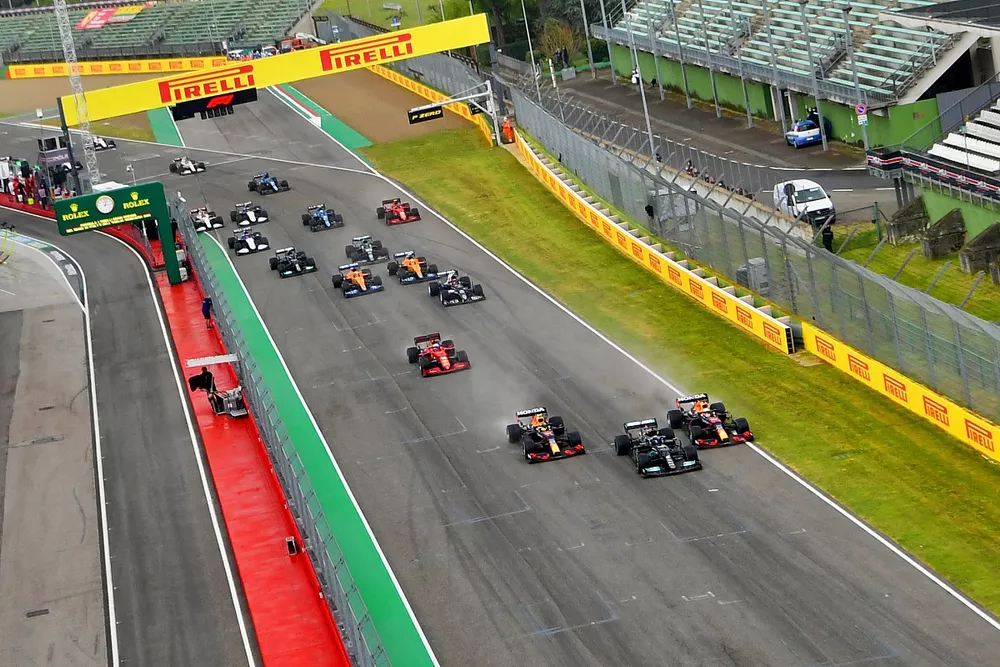
Changing regulations, particularly in Formula 1, can be expensive. Invariably they come with cries of being unnecessary and sometimes the reasons for them can be debated. Lewis Hamilton has already suggested that the tweaks for 2021 were made to “peg us back” in the wake of Red Bull’s renewed challenge to Mercedes.
But rule changes are an important, integral part of motorsport, for a number of reasons. The most obvious are probably safety and the need to respond to technological trends or developments.
F1 rulemakers are in a constant battle to contain speeds so that the cars don’t ‘outgrow’ current circuits. Changing cars is cheaper and more sensible than constantly revising the circuits.
This used to take the form of engine regulations but more recently aerodynamics – the key driving force behind F1 performance for the past three or four decades – has been the target.

Jos Verstappen, 1994 Belgian GP
Photo by: Motorsport Images
In a similar vein, rule changes allow a response to technological progress that might be undesirable – such as traction and stability control – or that push the performance envelope on too quickly, such as the first era of ground-effects.
They allow motorsport to follow automotive trends when required too, such as the increased efficiency of the much-maligned turbo-hybrid powerplants.
Other safety developments, including the halo, can trigger rule changes, though these do not always have significant impacts on cost or the competitive order. As with any change, people often initially lament seeing something different before getting used to the ‘new normal’.
Rule changes are often expensive and must be carefully considered – which they haven’t always been in F1 – but they are also important. And, done right, they offer extra intrigue and excitement at the start of (and during) a new season
But almost as important – if intended or not – is that rule changes can also mix up the competitive order. Periods of domination, which get longer and longer over time, are not good for F1 as a whole and fans always respond to the excitement of increased competition or a different order to the one they saw the year before.
Almost all major F1 rule revolutions in world championship history have resulted in a changing of the guard at the front – or at least a fresh challenge for the frontrunners. The exceptions are McLaren’s time at the top across the switch from turbo to normally aspirated power in 1988-89 and the continuing Mercedes winning streak despite new aero regulations for 2017, though in the latter example the change had the impact of bringing Ferrari much closer to the (then) Silver Arrows.

McLaren MP4-4 Portuguese GP 1988
Photo by: Motorsport Images
The downside is that new regulations often spread out the field as the bigger/better-funded teams can adapt better and faster. But there are exceptions. The banning of all the electronic gizmos for 1994 closed up the field considerably, ending a Williams advantage that was so big it was more akin to the gaps seen in the 1950s.
The 2022 regulations are aimed at doing something similar, while also addressing the financial issue with a cost-cap philosophy that has already kicked in. If more teams have a chance of winning next season few will be complaining about the changes. And even Hamilton, who says he enjoys competition, will surely welcome it – assuming he decides to stay in F1.
The 2022 ruleset is also aimed at improving the wheel-to-wheel racing by tackling the issue of ‘dirty’ air compromising a chasing car. This has been a problem in F1 since the 1980s and is one it has failed to address properly, despite several rule changes. But that’s more about the way the changes were worked out and implemented than it is about the fact things changed. Hopefully F1 2022 will be more successful at tackling the issue.
Rule changes are often expensive and must be carefully considered – which they haven’t always been in F1 – but they are also important. And, done right, they offer extra intrigue and excitement at the start of (and during) a new season.
Max Verstappen, Red Bull Racing RB16B Lewis Hamilton, Mercedes W12 and Valtteri Bottas, Mercedes W12
Photo by: Andy Hone / Motorsport Images
We want your opinion!
What would you like to see on Motorsport.com?
Take our 5 minute survey.
- The Motorsport.com Team
Read and post comments
Read also :
Share Or Save This Story
Copy link
Share on Viber
Previous article Is Miami the breakthrough deal that F1 needs in the USA?
Next article Brivio: Team radio biggest difference between F1 and MotoGP
Top Comments
There are no comments at the moment. Would you like to write one?
View More & Comment

More from
Kevin Turner
The greatest F1 campaigns with no wins
Formula 1
The greatest F1 campaigns with no wins

Latest news

13 Autosport retains unchanged lineup for 2027 IMSA campaign, eyes global expansion
IMSA
IMSA IMSA 7 min
13 Autosport retains unchanged lineup for 2027 IMSA campaign, eyes global expansion
Bourdais, Moss headline second batch of Sebring's 75 all-time greatest drivers
IMSA
IMSA IMSA 25 min
Bourdais, Moss headline second batch of Sebring's 75 all-time greatest drivers

IndyCar driver and Fox Sports reporter Jack Harvey announces cancer diagnosis
IndyCar
Indy IndyCar 34 min
IndyCar driver and Fox Sports reporter Jack Harvey announces cancer diagnosis
Cadillac’s F1 brakes are still a problem: ‘I had to lift and coast on lap two’
Formula 1
F1 Formula 1
Singapore GP
1 h
Cadillac’s F1 brakes are still a problem: ‘I had to lift and coast on lap two’
Feature
Discover prime content

Subscribe and access Motorsport.com with your ad-blocker.
From Formula 1 to MotoGP we report straight from the paddock because we love our sport, just like you. In order to keep delivering our expert journalism, our website uses advertising. Still, we want to give you the opportunity to enjoy an ad-free and tracker-free website and to continue using your adblocker.
You have 2 options:
- Become a subscriber.
- Disable your adblocker.
Subscribe now Already subscribed? Sign in here
Already disabled your adblocker?
Reload page
Manage Alerts
Subscribe