Breaking news
Formula 1
Renault staff worked at Red Bull in "unthinkable" scenario
Red Bull boss Christian Horner has revealed the ‘unthinkable’ scenario in which Renault personnel, including senior technical figures, worked at his team’s factory recently as part of Project Pitlane.
Jonathan Noble James Allen
Edited: May 3, 2020, 10:16 AM
Copy link
Share on Viber
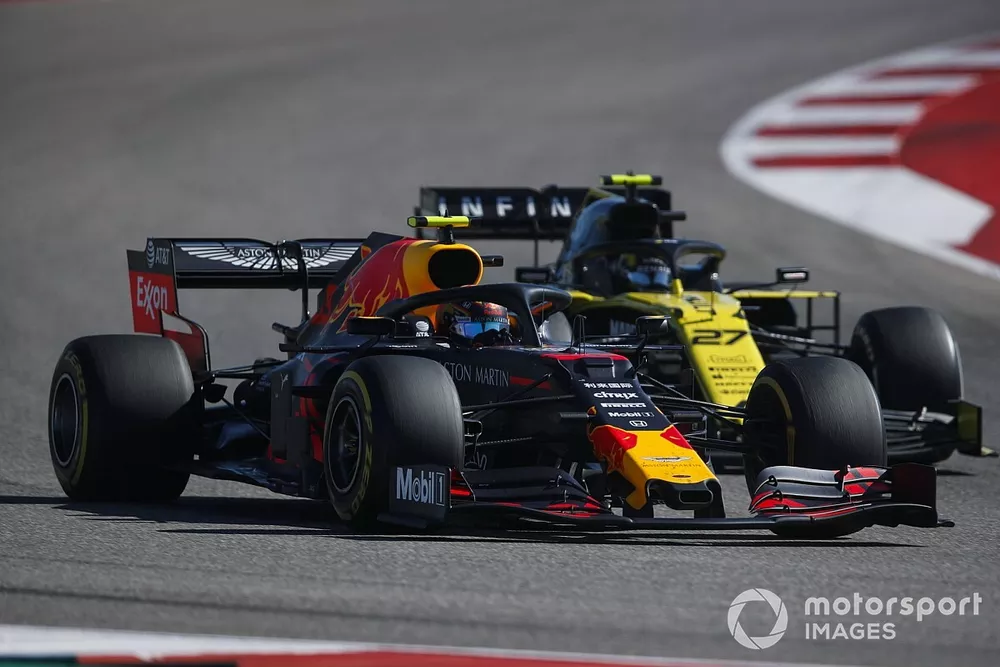
Normally teams are very strict about who has access to their facility in case any of their technical secrets are revealed to rivals.
But all such concern was put aside recently as F1 teams worked together to help design and build breathing aids and ventilators for the British government in response to the coronavirus crisis.
Although the low-cost ventilator that Red Bull and Renault worked together on was not pushed into service, because the government felt the ventilator type was not required for now, Horner said he remained incredibly proud of the efforts put in.
Speaking exclusively to Motorsport.com, Horner said: “I think it said a huge amount for Formula 1. We approached the government as soon as we saw this crisis looming, and then got in coordination with other teams as well.
“We identified a project that we were assigned to, and we were assigned to it with Renault. I was astounded to see the volunteers that stepped forward unconditionally 24/7 to support this project.
“We had people like our chief designer Rob Marshall working on it. I think he did three successive all-nighters on it, and unbelievable efforts that were going in to turn what was a fairly rudimentary concept into a fully-functional, fully-developed, ventilator.”
Read Also:
As revealed recently, Red Bull had an intensive care bed and prototype ventilators situated in the race bays at its Milton Keynes factory while work was going on.
And Horner said that Renault team personnel were working as one with Red Bull staff on the project – despite some historic tensions between the two outfits.
“At that point your competitive spirit goes out the window, and it’s about coming up with solutions,” said Horner.
“So we had people from Renault working in our factory, in their own team kit, in our race bays, in our facility. Unthinkable under normal circumstances!
“We had [Renault technical advisor] Bob Bell working alongside Rob Marshall, coming up with solutions that astounded the industry.
“It was not only the solution, but also the speed at which Formula 1 operates, because solutions were identified and machined overnight, and running on a rig by the time people came back in the following morning.
“What normally would have taken three years to get this machine signed off was actually done in three-and-a-half weeks.”
Although Horner said the team was saddened the project did not go forward this time, he says ultimately there were positives from the fact it wasn’t required just now.
“Of course there was a degree of disappointment when we didn’t then go into flat out production once we were geared up to do that.
“But then also, when you thought about it, it was actually a very good thing that they weren’t required, because it meant that the need for the National Health Service wasn’t so dire that these emergency ventilators weren’t going to be required.
“I think it highlighted Formula 1’s ingenuity, it’s ability to problem solve, rapid prototype, and come up with fixes, and just the can-do attitude, and never be beaten philosophy of Formula 1.
“I think it epitomised all the positives about the sport, and some of the cleverest and brightest engineers in the country that work in Formula 1.”
We want your opinion!
What would you like to see on Motorsport.com?
Take our 5 minute survey.
- The Motorsport.com Team
Read and post comments
Read also :
Share Or Save This Story
Copy link
Share on Viber
Previous article The small wing detail that shows Mercedes is still pushing
Next article Lauda's final stand: When Formula 1 last visited Zandvoort
Top Comments
There are no comments at the moment. Would you like to write one?
View More & Comment

More from
Jonathan Noble

Brundle awarded OBE in King’s New Year’s honours
Formula 1
Formula 1
Brundle awarded OBE in King’s New Year’s honours
The new rules dilemma that will define the 2025 F1 season
Formula 1
Formula 1
The new rules dilemma that will define the 2025 F1 season

Verstappen issues Red Bull title warning in push for RB21 progress
Formula 1
Formula 1
Australian GP
Verstappen issues Red Bull title warning in push for RB21 progress

More from
Red Bull Racing
Max Verstappen slams “unacceptable” bumps at Austin F1 track: “It's out of control”
Formula 1
Formula 1
United States GP
Max Verstappen slams “unacceptable” bumps at Austin F1 track: “It's out of control”


Red Bull called Christian Horner to thank him for F1 engine project after maiden win
Formula 1
Formula 1
United States GP
Red Bull called Christian Horner to thank him for F1 engine project after maiden win
Latest news
NASCAR Truck Series championship down to two with two to go
NASCAR Truck
NSTR NASCAR Truck 1 h
NASCAR Truck Series championship down to two with two to go
MotoGP Australian GP: Marc Marquez recovers from crash to take pole at wet Phillip Island
MotoGP
MGP MotoGP
Australian GP
3 h
MotoGP Australian GP: Marc Marquez recovers from crash to take pole at wet Phillip Island

No factory Honda bikes in Australian GP as Luca Marini withdraws due to virus
MotoGP
MGP MotoGP
Australian GP
4 h
No factory Honda bikes in Australian GP as Luca Marini withdraws due to virus
Feature
Discover prime content




Subscribe and access Motorsport.com with your ad-blocker.
From Formula 1 to MotoGP we report straight from the paddock because we love our sport, just like you. In order to keep delivering our expert journalism, our website uses advertising. Still, we want to give you the opportunity to enjoy an ad-free and tracker-free website and to continue using your adblocker.
You have 2 options:
- Become a subscriber.
- Disable your adblocker.
Subscribe now Already subscribed? Sign in here
Already disabled your adblocker?
Reload page
Manage Alerts
Subscribe