Breaking news
Formula 1
F1 2020 clutch changes to make starts more driver-dependent
The FIA has introduced a raft of changes to the clutch management in 2020’s Formula 1 technical regulations, increasing the difficulty for the drivers at the race start.

Jake Boxall-Legge
Edited: May 1, 2019, 11:19 AM
Copy link
Share on Viber
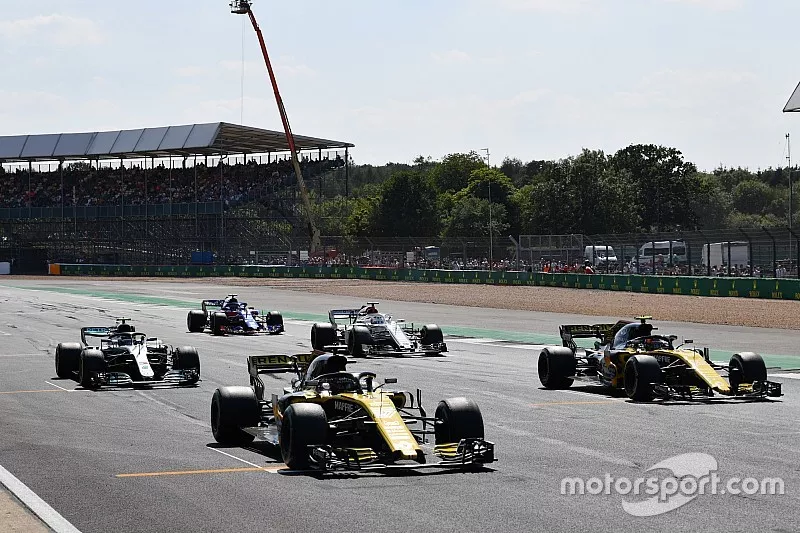
Along with making pull-type paddle-activated clutches mandatory for each driver, the clutch signals used by the standard ECU will also be heavily monitored by the FIA to limit any advantageous mapping.
Should a team wish to use two clutch paddles on the steering wheel, each paddle must now be identical in form, motion and mapping - and drivers may be asked to demonstrate that both paddles work identically.
Furthermore, the paddle must work linearly with the clutch - meaning that the drivers’ actions must be wholly representative of the engagement of the clutch.
Article 9.2.1, section F in the technical regulations states that: “To ensure that the signals used by the FIA ECU are representative of the driver’s actions, each competitor is required to demonstrate that the paddle percentage calculated by the ECU does not deviate by more than +/-5% from the physical position of the operating device measured as a percentage over its entire usable range.”
This ensures greater responsibility is placed on the driver at the race start, meaning that there is the potential for greater variation off of the line.
Further changes have been made to stamp out the effect of oil burning within the car, creating more stringent rules for the transfer of oil to the powertrain.
This comes in the definition of the auxiliary oil tank (AOT), of which only one may be included within the car. This, and the pipework connecting to the engine, cannot exceed 2.5 litres - and must be solenoid controlled.
The amount of fuel outside of the survival cell has also been reduced from 2 litres to 0.25 litres, stopping any fuel flow trickery or mixing of oil with fuel in other areas of the car.
In addition, the FIA has also made changes to the regulations restricting rear-view mirrors, enclosing them in a smaller box to minimise the aerodynamic gain that can be taken from them.
These have also been moved further inwards, following suggestions that the 2019-specification mirrors offer limited visibility, and must now be 30mm closer to the survival cell and 40mm lower down.
We want your opinion!
What would you like to see on Motorsport.com?
Take our 5 minute survey.
- The Motorsport.com Team
Read and post comments
Read also :
Share Or Save This Story
Copy link
Share on Viber
Previous article Formula 1's Q4 plans for 2020 abandoned
Next article Kvyat urges Toro Rosso to look into sudden pace drop-off
Top Comments
There are no comments at the moment. Would you like to write one?
View More & Comment

More from
Jake Boxall-Legge
Exploring Ferrari's 'less than a tenth' US GP update package
Formula 1
Formula 1
United States GP
13 h
Exploring Ferrari's 'less than a tenth' US GP update package

George Russell: F1 2026 season a test of "character and resilience"
Formula 1
Formula 1
United States GP
21 h
George Russell: F1 2026 season a test of "character and resilience"
Latest news
Red Bull identifies two "key focus" areas after Max Verstappen's promising start in Austin
Formula 1
F1 Formula 1
United States GP
52 min
Red Bull identifies two "key focus" areas after Max Verstappen's promising start in Austin
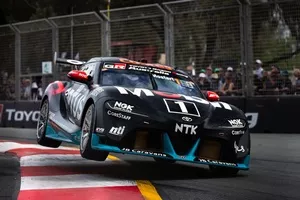
Supercars Gold Coast: Chaz Mostert dominates wet race for Walkinshaw Toyota
Supercars
SUPC Supercars
Gold Coast 500
1 h
Supercars Gold Coast: Chaz Mostert dominates wet race for Walkinshaw Toyota
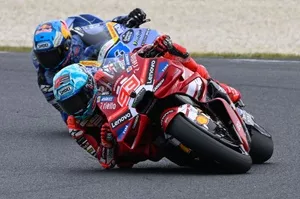
Alex Marquez says overtaking Marc Marquez was “too risky” in Australian GP sprint
MotoGP
MGP MotoGP
Australian GP
1 h
Alex Marquez says overtaking Marc Marquez was “too risky” in Australian GP sprint
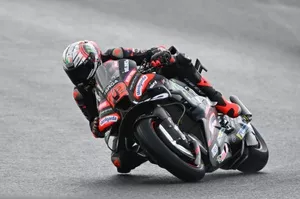
Jorge Martin declared unfit for Australian GP after suffering fracture in sprint
MotoGP
MGP MotoGP
Australian GP
2 h
Jorge Martin declared unfit for Australian GP after suffering fracture in sprint
Feature
Discover prime content




Subscribe and access Motorsport.com with your ad-blocker.
From Formula 1 to MotoGP we report straight from the paddock because we love our sport, just like you. In order to keep delivering our expert journalism, our website uses advertising. Still, we want to give you the opportunity to enjoy an ad-free and tracker-free website and to continue using your adblocker.
You have 2 options:
- Become a subscriber.
- Disable your adblocker.
Subscribe now Already subscribed? Sign in here
Already disabled your adblocker?
Reload page
Manage Alerts
Subscribe